
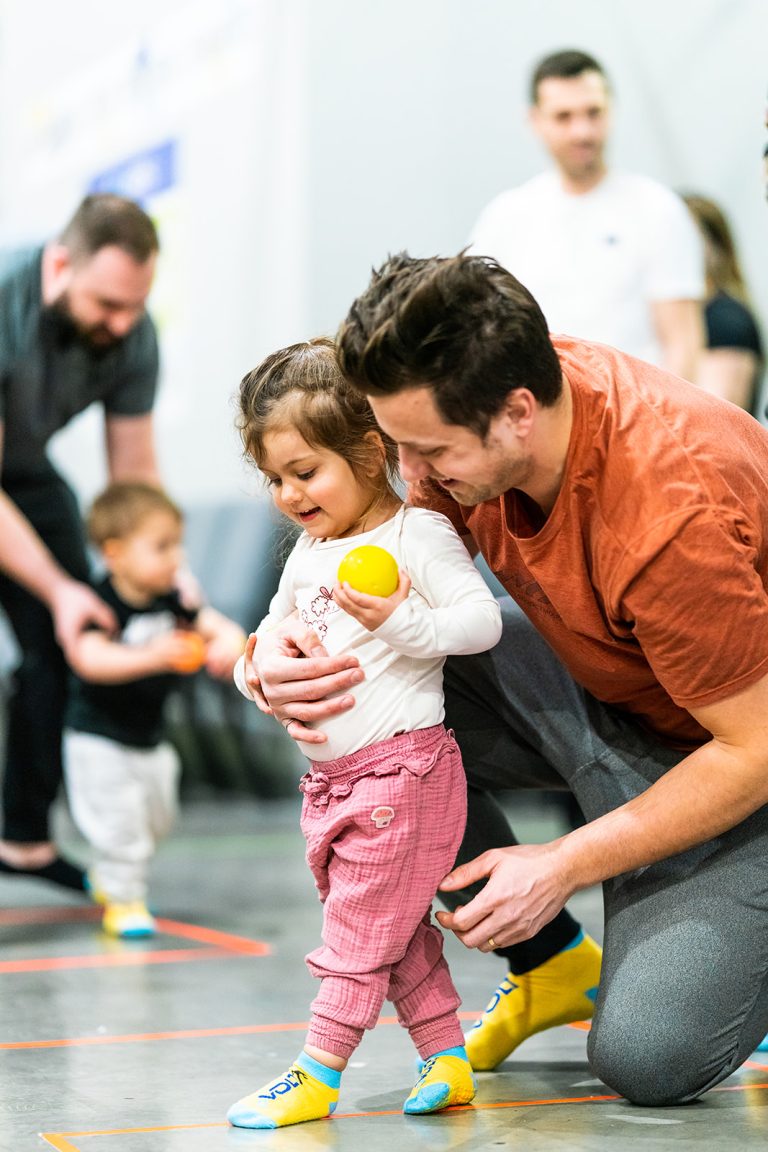
When a label sticks too early
“He/she doesn’t like sports.”
“It’s not their thing.”
“He/she prefers to stay calm.”
These are phrases many parents say with good intentions. They’re never meant to be hurtful. Yet they have one thing in common: they lock a child into an identity that often isn’t truly theirs.
In most cases, a child isn’t “not sporty.” They’re uncomfortable with certain types of physical activity. And that nuance makes all the difference.
Structured sports vs. free play: two very different experiences
When we talk about “sports,” we naturally think of:
- clear rules,
- expected performance,
- a competitive setting,
- outside eyes (coach, team, parents).
For some kids, it’s motivating. For others, it’s paralyzing.
Free play works differently
- no scoring,
- no rankings,
- no fixed role,
- no obligation to succeed.
A child moves out of curiosity, for fun, with a desire to explore. They choose their pace, their challenges, their breaks. And that’s often when everything shifts.
Why some kids “drop out” of traditional sports
1. Fear of doing it wrong
Some children are very aware of their bodies… and their limits. They quickly notice when they’re not “good,” when they slow the group down, when they draw attention.
Result: they withdraw.
2. Invisible pressure
Even without meaning to, adults project:
- expectations,
- comparisons,
- poorly calibrated encouragement.
For a sensitive child, that can turn an enjoyable activity into a source of stress.
3. A framework that’s too rigid, too soon
Not all children need structure at the same time.
Some first need to get to know and understand their bodies before learning how to organize them.
What free play really makes possible
Move without being judged
In a free environment, a child isn’t being evaluated. They can:
- try,
- fall,
- try again,
- change their mind.
That right to make mistakes changes everything.
Make peace with their body
When there’s no goal to reach, a child starts to:
- listen to their sensations,
- understand what they enjoy,
- discover what they’re capable of.
Body confidence is built from the inside, not through performance.
Build lasting motivation
A child who discovers the joy of moving on their own is far more likely later to:
- want to learn a discipline,
- sign up for a structured activity,
- stick with it.
“He never runs”… until the day he runs for fun
It’s a common scene.
A child seen as “not very active” finds themselves in a space where:
- they aren’t being watched,
- they aren’t being compared,
- they can choose.
And suddenly:
- they climb,
- they jump,
- they run,
- they do it again.
Not because someone asked them to. But because they want to.
Parents’ key role: observe without directing
It’s often the hardest part.
Resist the urge to guide
Saying:
- “Be careful,”
- “Try it like this,”
- “You should…”
Even with the best intentions, it can break their momentum.
Trust the process
Free play isn’t disorganized. It’s self-organized.
The child:
- tests their limits,
- adjusts their movements,
- develops their judgment.
What children learn… without even realizing it
Far from being “just play,” free play builds:
- coordination,
- balance,
- risk management,
- perseverance,
- self-confidence.
And above all: a positive relationship with movement.
What if the issue isn’t the child… but the framework?
Before concluding a child “isn’t sporty,” it’s worth asking:
- Have they had the chance to move without pressure?
- Have they been in a safe, supportive environment?
- Have they been able to explore at their own pace?
In many cases, changing the framework is enough to reveal a completely different relationship with physical activity.
Redefining what it means to “be sporty”
Being sporty isn’t:
- loving competition,
- performing,
- following complex rules.
It’s first and foremost:
- enjoying moving,
- feeling good in your body,
- wanting to do it again.
And that, every child is capable of when we give them the chance.
Leave the door open
Free play doesn’t close the door on structured sports. It prepares for them. It helps a child build:
- their confidence,
- their enjoyment,
- their relationship with movement.
And sometimes, this simple shift in perspective turns “He isn’t sporty” into
“He just found his way of moving.”
Sources – Cet article s’appuie notamment sur les recommandations de l’Organisation mondiale de la Santé (OMS) et de la Société canadienne de pédiatrie (SCP)concernant l’importance du jeu actif et du mouvement libre chez les enfants.